
Introduction
The electrification of bicycles is experiencing unprecedented growth by 2025. In Europe, more than 2 million electric bike kits are sold every year, reflecting a strong enthusiasm for soft and electric mobility. But why opt for an electrification kit rather than buying a new electric bike? Which bike models are best suited to this conversion to benefit from optimal electric assistance? This article guides you step by step to convert your classic bicycle into a high-performance electric bicycle using a suitable kit, while incorporating the latest technological advances and market trends.
Summary
-
How to choose the electric assistance kit that suits your needs?
-
What criteria allow us to choose a bicycle that is easy to electrify?
-
Why is it essential to adapt the kit to your cycling practice?
-
How to convert your bicycle into an electric bike? A practical guide
Why electrify your bike with an electric kit?
Ecological and economic advantages of electrification
Using an electric bike conversion kit significantly reduces your carbon footprint. By replacing some of your motorized journeys with electric bike trips, you substantially decrease CO2 emissions and air pollution, actively contributing to the fight against climate change and the degradation of air quality in urban areas. Furthermore, a conversion kit offers a cost-effective solution compared to buying a new electric bike, with prices generally ranging from €500 to €1,500 depending on the power and range chosen. This increased accessibility makes electric mobility easier to embrace, whether for daily commutes, leisure activities, or sports.
In addition to these environmental and economic benefits, electrification also increases comfort and flexibility when travelling: hills become more accessible, fatigue is reduced, and distances travelled can be longer, opening up new perspectives for exploration and soft mobility.
What types of electric bike kits are available?
The three main families of kits
The market mainly offers three types of electrification kits depending on the position of the motor:
-
Front wheel motor :
The motor is integrated into the front wheel, allowing for a quick conversion without major modifications to the bicycle. It is particularly well-suited to lightweight urban bikes. However, front-wheel drive can sometimes be less effective on slippery or uneven terrain. -
Rear wheel motor :
This kit offers improved grip and traction, especially on a mountain bike or a loaded bicycle. Installation is slightly more technical as it may involve modifying the derailleur or braking system. The rear hub motor is appreciated for its robustness and power. -
bottom bracket (or mid-drive) motor :
More complex to install, this type of motor is positioned at the bottom bracket. It provides very smooth and natural electric assistance, offering a feel similar to muscle propulsion. This system is most effective for hilly terrain and long journeys.

Choose according to your needs
The choice of kit type will therefore depend on the bicycle, your riding style, the desired ease of installation, and the performance you're looking for. For example, an urban cyclist might prefer a front-wheel motor for its simplicity, while a mountain biker would opt for a mid-drive motor for more power off-road.
How to choose the electric assistance kit that suits your needs?
The essential criteria to consider
For select the ideal electrical kit, Several criteria must be taken into account:
-
Type of bicycle : Mountain bike, city bike, trekking or folding bike, each category requires a suitable kit.
-
Intended use : Urban travel, occasional rides, long distances, or difficult terrain influence the choice of power and range.
-
Mechanical compatibility : Frame size and shape, brake type (disc or rim brakes), wheel width, and available space for the battery.
-
Weight and robustness : A kit that is too heavy on a fragile frame can damage the bike or reduce the lifespan of the components.
-
Autonomy and battery : Depending on your journeys, a battery with a higher capacity (in Wh) will be necessary for longer journeys.
-
Budget : Depending on the quality of the components and features, the price of the kits varies widely.
Practical advice
It is advisable to choose a kit from a recognized brand, offering a good warranty and after-sales service. Testing several models if possible, or seeking advice from professionals, helps avoid unpleasant surprises. Finally, installation by a specialist guarantees safety and durability.
What criteria help in choosing a bicycle that is easy to electrify?
Mechanical compatibility and frame materials
The bike's frame is a key element for a successful conversion. An open steel or aluminum frame is ideal because it offers enough space and strength to mount the motor and battery. Carbon frames, while very lightweight, are often tricky to modify and require specific skills to avoid damage.
The type of brake is also crucial: electric kits are not always compatible with rim brakes, and disc brakes often require a motor cut-off sensor to ensure safety.
Influence of bicycle type
-
Mountain biking : robust frame, suitable for powerful kits.
-
Urban bike : simple frame, often straight, easy to equip.
-
Trekking : Reinforced frame, ideal for heavy batteries.
-
Folding bike : demand for lightweight and compact kits.
Why is it essential to adapt the kit to your cycling practice?
Each use of the bicycle requires specific kit features:
-
Urban use : prioritize lightness and simplicity.
-
Off-road : Choose a robust and waterproof kit.
-
Long distances : opt for a high-capacity battery and smooth assistance.
-
Daily commutes : importance of reliability and ease of maintenance.
Adapting the kit to your practice guarantees an optimal experience, less wear and tear and enhanced safety.
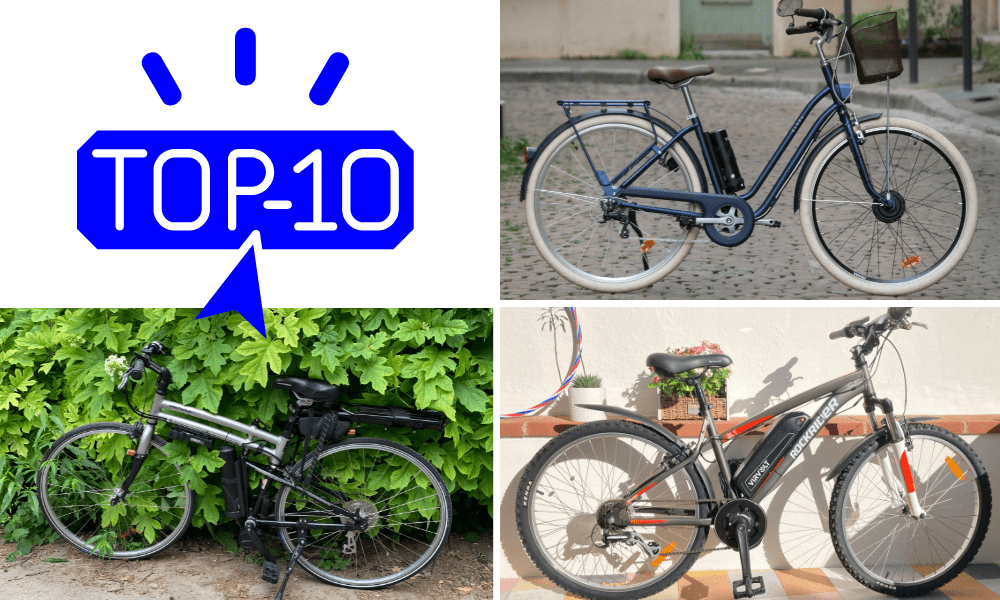
Top 10 bikes best suited for electrification in 2025
1. The full-suspension mountain bike, an ideal base for an electric mountain bike kit
Known for its robustness and versatility, the full-suspension mountain bike has a frame and geometry that easily accommodate a robust electric bike kit. The suspension effectively absorbs shocks, protecting the electronic components. Ideal for rough terrain, it offers both performance and comfort.
2. The classic urban bike, easy to convert

Urban bikes have straight frames, which facilitates the installation of batteries and motors, often positioned on the front or rear wheel. Their regular use requires a reliable, easy-to-maintain kit with smooth assistance.
3. The aluminum road bike, compatible with an electric kit
The lightweight and rigid aluminum frame allows for a smooth and efficient conversion. However, some models limit the space for the battery, sometimes requiring alternative solutions such as a luggage rack.
4. The hardtail mountain bike, simple and effective to electrify
Offering a good compromise between mechanical simplicity and comfort, the hardtail mountain bike is often preferred by beginners. The conversion is generally quick and the result very satisfying.
5. The folding bike, a compact option for electric assistance

Perfect for urban mobility and multimodal transport, this folding bike supports a lightweight electric motor kit. Its low weight combined with the assistance makes daily commutes much easier.
6. The hybrid bike, versatile and compatible with most kits
Combining characteristics of road bikes and mountain bikes, the hybrid bike offers a robust and comfortable frame, compatible with most kits on the market.
7. The trekking bike, perfect for long distances
Designed for travel and hiking, the trekking bike supports high-capacity batteries, ideal for long distances.
8. Children's bicycles: a safe introduction to electrification
Some children's bikes can accommodate lightweight and secure kits, allowing a gradual introduction to electrification with controlled assistance.
9. The city bike made of steel, sturdy and comfortable
The steel frame is robust, handles extra weight well, and offers natural comfort thanks to its flexibility. Attaching a battery is easy.
10.The vintage bicycle, a second life thanks to electric conversion

Giving vintage bicycles a second life with a conversion kit allows you to blend retro charm with modernity. This enhances cycling heritage while taking advantage of the benefits of electric assistance.
How to convert your bicycle into an electric bike? A practical guide
Choosing the right conversion bike kit
Start by checking your bike's compatibility: dimensions, brake type, battery space. Then, define your intended use to choose a kit with the appropriate power and range.
Do install your electric bike kit at a professional's for higher quality.
Steps for installing an electric bike kit
-
Secure the motor (wheel or pedal assembly).
-
Install the battery on the frame or luggage rack.
-
Connect cables, controller and handlebar controls.
-
Perform a full test before first use.
Tips for maintaining an electric assist kit
-
Recharge the battery regularly, without letting it discharge completely.
-
Check the fasteners and the cleanliness of the components.
-
Protect the system from moisture and shocks.
Case studies and user feedback
Maxime and his successfully converted mountain bike
Maxime opted for a hardtail mountain bike equipped with a robust kit. He particularly appreciates the assistance on climbs and the increased battery range, which has motivated him to ride more often.
Benefits experienced with an electric assistance kit
Users report a significant reduction in fatigue, improved comfort, and increased motivation to use their bikes daily. The conversion also allows them to discover longer and more varied routes.
Innovations 2025: What the future holds for electric kits
Recent years have seen the arrival of more compact and powerful motors and batteries offering greater range with reduced weight. By 2025, these innovations will make conversion more accessible, more reliable, and more customizable.
Furthermore, legislation is evolving, encouraging electrification while ensuring user safety through strict standards. Finally, energy recovery solutions for downhill slopes are beginning to emerge.
FAQ: Answers to frequently asked questions
Does converting your bike damage the frame?
If the kit is well chosen and compatible, and the installation is carried out correctly, there is no risk of damaging the frame.
What maintenance is required for an electric kit?
Primarily battery maintenance, regular checking of fasteners and protection against moisture.
Is a converted bicycle legal?
Yes, provided that the motor power does not exceed 250 W and that the assistance stops at 25 km/h, in accordance with European regulations.
Conclusion
Electrifying a bicycle is an ecological, economical and accessible solution thanks to the diversity of kits available in 2025. Whatever your bicycle model — mountain bike, city bike, vintage or folding — there is a suitable kit that will meet your needs.By following our top 10 list of bikes that are easy to electrify and our practical tips, you can successfully transform your bike and fully enjoy the benefits of electric assistance. Don't wait any longer to take the plunge and discover our solutions at [website/store name]. Virvolt !
Partager:
Mechanical doping: when bicycle electrification technologies betray the spirit of professional cycling
Retirement: there may be something better to offer than an electrically assisted bicycle