
This is a subject that is particularly close to our hearts.
Because at Virvolt, we want cycling to truly embody the sustainable mobility of tomorrow. We want it to be 100% ecological. We want this mode of transport – equipped with electric bike kit – that is as good for man as it is for the environment and our planet. But it's not that simple.
Bicycles are not 100% carbon neutral today.
In this article, we've tried to break down the subject to help you understand all the key points, advantages, and limitations, as objectively as possible. Let's go! ✨
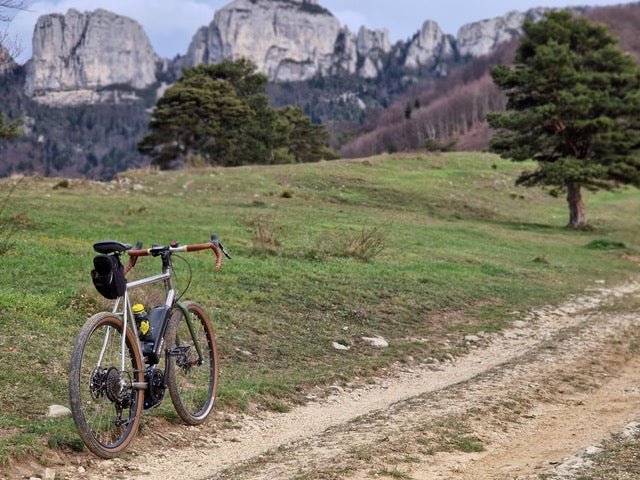
A glimpse of a superb electric bicycle by Vagabonde, a Virvolt partner reseller

A closer look at the environmental impacts of cycling
To analyze the environmental impact of a bicycle (across its entire life cycle – manufacturing, use, and recycling), we need to go back in time and look at its history. We also need to examine the major trends in the sector. (materials, durability, uses, etc.). We present these different aspects to you 👇
The evolution of materials
Before the 1980s, the vast majority of bicycles were manufactured steel. This material was not only used for the frame but also for most of the parts (frame, wheels, components, etc.). Steel also had the advantage of being recyclable and easily repaired.
Overview of a bicycle with a steel frame

And then, little by little, we moved from steel to other materials: aluminum, titanium, stainless steel, carbon. Since then, the repairability rate has dropped. Unfortunately, studies on the subject are very limited at the moment.
However, there are a few initiatives worth highlighting:
- Reynolds (English manufacturer of bicycle tubes) has analyzed this point. His finding? Manufacturing a steel frame has an impact of 17.5 kg of CO2. Manufacturing a titanium or stainless steel frame has an impact of approximately 55 kg of CO2 per frame. In other words? Three times more.
- Starling Cycles (manufacturer of steel mountain bikes) made a similar observation. A carbon frame consumes 16 times more energy than a steel frame. (equivalent to 280 kg of CO2).
- A study published in 2014 They calculated the footprint of a Specialized aluminum road bike frame with a carbon fork. The result? The estimated cost was 2,380 kilowatt-hours of primary energy and over 250 kg of carbon. That's about 14 times that of a steel frame. (without fork) as calculated by Reynolds.
Enough with the numbers. Let's talk about the causes.
Here are the key impact phases highlighted 👇
- Materials preparation (74%)
- The interview phase (15.5%)
- The assembly phase (5%)
Excerpt from an article in the popular media outlet Lowtech Magazine

Manufacturing methods
Next comes the actual manufacturing of the bicycle.
Here, we find, more or less, the same limitations as for the fast fashion industry.
At the beginning of the century, we manufactured our components and bicycles locally, in France and Europe. Then globalization happened. Factories were gradually closed and relocated to low-cost countries. China quickly became the world's leading manufacturer for the bicycle industry. (spare parts, engines, batteries, frames, etc…). And when it's not China, it's usually neighboring countries, always in Asia.
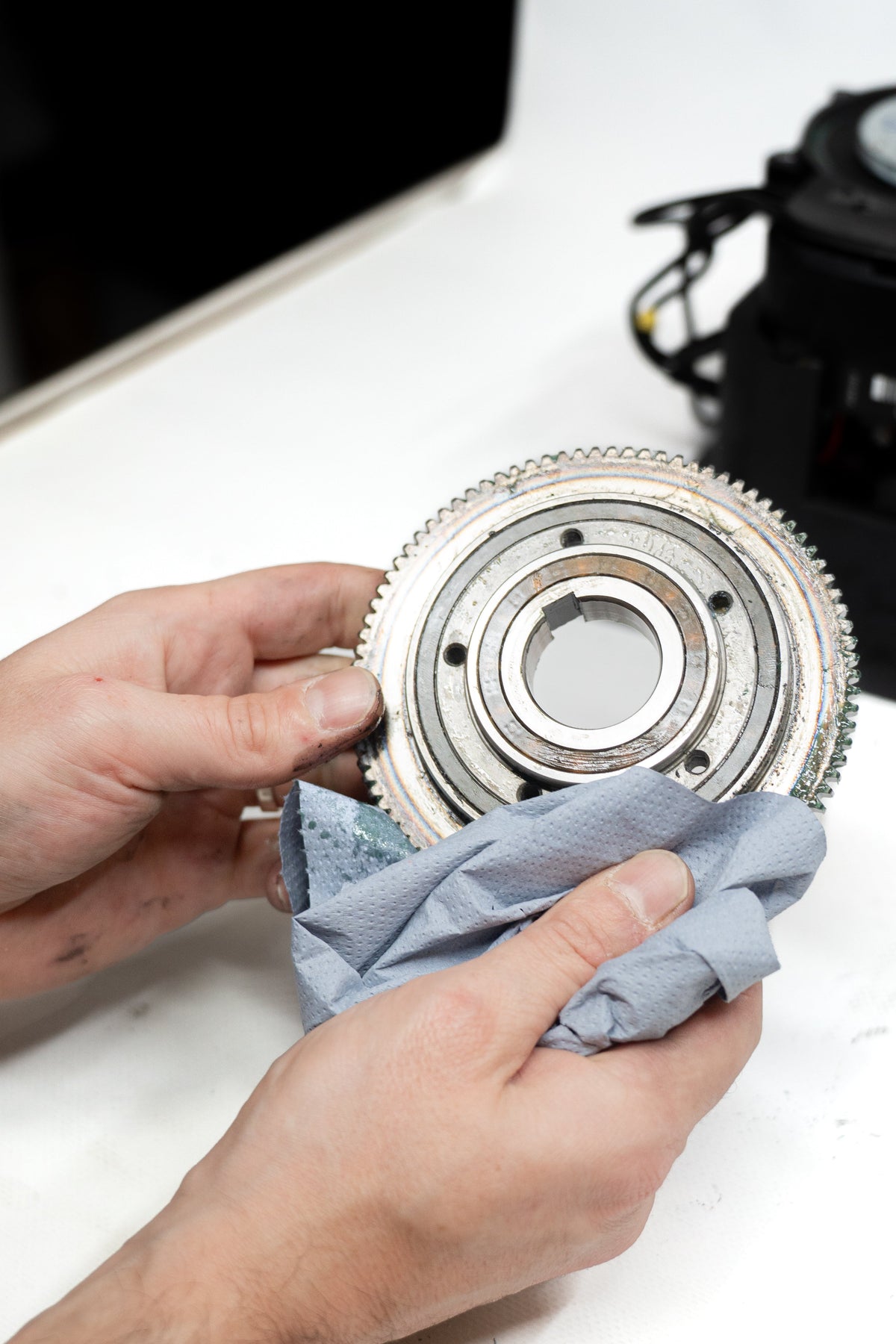
At Virvolt, we are very pleased to offer you engines assembled in France. Here's a glimpse of the factory where they are made, at Renault (in Flins)/Photo @Olivier Martin Gambier

It should be noted that Europe is starting to return to the forefront. Some factories have reopened.
- In 2012, 13.5 million bicycles have been produced in the European Union
- In France, 354,536 electric bikes (e-bikes) were produced in 2022 (data based on a study by the Union Sport Observatory). & Cycles 2022)
It's not bad, but we're far from where we need to be. In France alone, almost 3 million bicycles were sold in 2021. 🇫🇷
Returning to the manufacturing process, here is an overview of the 4 factors that accentuate the impact:
- Transportation (raw materials, components, assembled bicycles, etc.)
- The manufacturing (and the energy used to power the factories - often coal-fired in China)
- Automation and the use of robots and machines on a large scale : To be profitable, these systems must operate continuously. This tends to lead to overproduction.
We're not there yet, but not far off.
Product durability
First, let's talk about normal wear and tear.
A bicycle is a piece of equipment that needs maintenance. Inevitably, some parts will need to be replaced over time. This is the case for tires, the chain, and brakes.
Component compatibility
The problem is that there is no (or no longer) a standard.
Before the 1980s, most manufacturers relied on the same types of parts. This meant that repairs were easy, spare parts were readily available in most stores, and almost everything was compatible and interchangeable. This is no longer the case.
Today, compatibility is no longer the norm.
Manufacturers are filing more and more patented parts (source), custom formats, and constantly changing standards. A new bike released in 2020 will likely not have the same parts as a brand new bike released in 2023. And this is true even if the manufacturer is the same. We're almost at the point of having fashion collections, renewed every year.
The result? Planned obsolescence is on the rise.
This is particularly true for brakes (source).
The decline in component quality
Some also note a decline in quality.
You may have noticed it yourself. Our grandparents' bikes were built to last a lifetime. Many of us still use them daily, having barely had to replace a few parts (mainly the tires). The same can't be said for today's bikes, especially those in the budget category.
A good example is that of the saddle.
It's not lasting as long. It's cracking at the base of the shell. In contrast, our grandparents' bicycle saddles never budged. Why? More material, and a better quality material.

There are currently relatively few studies on the subject, but the feeling is there among a large number of professionals in the sector. Some even speak of "Bicycles built to break down" Or "Bicycle-shaped objects" (for the more critical).
In short, we're not going in the right direction on this point.
Good to know: This is also why, at Virvolt, our kits have been designed to be easily and inexpensively repaired. Our goal? To ensure you can keep them for as long as possible.
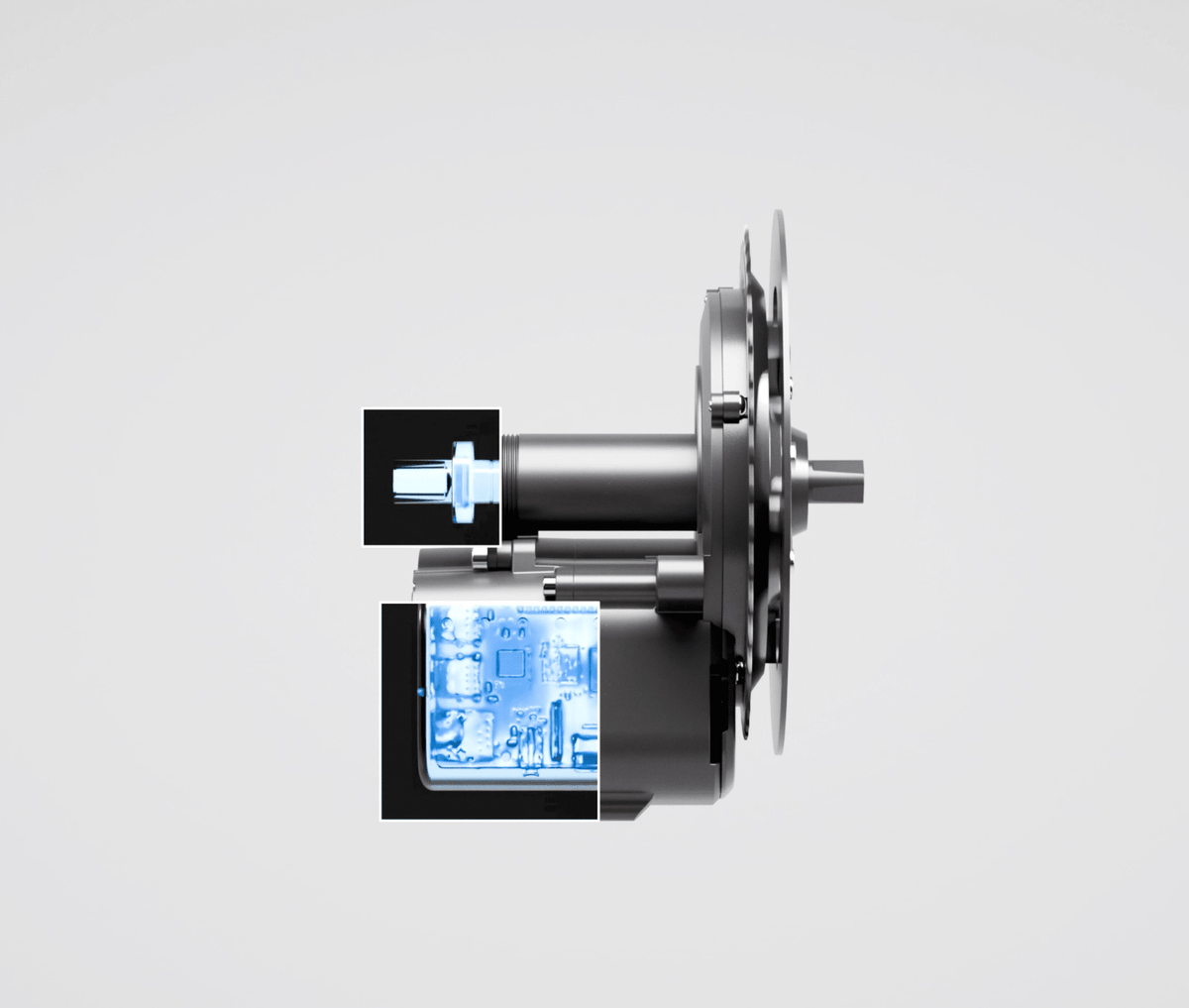
A Virvolt mid-drive motor being assembled at the Flins factory/Photo @Olivier Martin Gambier

The rise of electric bikes (e-bikes)
Sensitive point 👇
It's no longer a secret, the demand for e-bikes is exploding, all over the world.
The number of electric bikes sold worldwide rose from 3.7 million in 2019 to 9.7 million in 2021. This represents 10% of total bike sales. In Germany, the proportion even reaches 40%. 🇩🇪
Again, there are few studies at the moment on the general impact of VAEs.
A few researchers have nevertheless looked into the subject. Here's what they found:
- The CO2 emissions for manufacturing an aluminum e-bike would be 320kg
- For an aluminum bicycle without assistance, CO2 emissions would be 212 kg
- For a steel bicycle without assistance, the drop is even greater. They would be 35 kg.
A significant difference, then. The reason lies in the points mentioned above regarding manufacturing and logistics. (choice of materials, place of manufacture, transport, etc.). But not only that.
Beyond emissions, the lifespan of an e-bike is shorter than that of a conventional bicycle.
On the one hand, there are more points of failure (engine, battery, electronics, etc.), on the other hand, component incompatibility is omnipresent.
Finally, one last point: the energy required to use an electric bike. The infamous charging. However, this remains a minor consideration. The energy consumption of an electric bike (at 25 km/h) is only about 1 kilowatt-hour per 100 km.
This impact is greater for a cargo bike. However, it's still better if the cargo bike replaces a vehicle like a motorcycle or car.
What is the carbon footprint of a bicycle?
The impact in gCO2 per kilometer
According to a study developed by the European Cyclists' Federation, The carbon footprint of an electric bike is estimated at 22 gCO2e/km. To arrive at this figure, the federation assumes that the lifespan of an electric bike is 8 years and that the average distance traveled each year is 2,400 kilometers, following in-depth research on the subject. The study also takes into account that a lithium-ion battery has a lifespan of 500 to 600 cycles (one cycle = approximately 80 km).
Therefore, the carbon footprint of the electric bike = 22 gCO2e/km, distributed as follows:
- 7 g for manufacturing and maintenance
- 9g for electricity consumption (calculated from the average European electricity mix)
- 6g for the cyclist's "fuel": the energy expended by the cyclist compared to an individual at rest
22 gCO2e/km in total for the electric bike. How much for the mechanical bike? Almost the same: 21 gCO2e/km. However, the distribution is different: less for manufacturing, more for muscle power.
The impact in kg of CO2 at the time of production
A conventional bicycle requires an average of 100 kg of CO2 to produce, compared to 165 kg for an electric bicycle. This figure is slightly higher than the reference data previously used by the European Cyclists' Federation (134 kg).
Indeed, an electric two-wheeler will only consume about 20 grams of CO2 per 100 km
Over a year of commuting, at a rate of 10 km per working day, a cyclist on a conventional bicycle will emit 224 kg less CO2 than a motorist driving a combustion engine vehicle, compared to 223.5 kg less for an electric bicycle user.
What is the difference in impact between a bicycle and a car?
This is stating the obvious.
Cycling is more environmentally friendly than driving a car. However, it's important to clarify some figures and data:
- Carbon footprint comparison: The carbon footprint of manufacturing a petrol or diesel car is around 6 tonnes (for a model like the Citroën C1). This is equivalent, in terms of emissions, to manufacturing 171 steel bicycles or 28 aluminum ones.source]
- Comparison of the number of kilometers traveled : Cars travel on average around 300,000 km (source).If a bicycle can travel 20,000 km, you would need 15 to travel 300,000 km. For classic steel bicycles, the total carbon footprint of their manufacture is therefore six times lower than that of a small car. For aluminum e-bikes, the carbon footprint is around 4,800 kg of CO2. Lower, then, but with less margin for error.
In short, we have taken a few data points from among thousands of possible ones.
To delve deeper, we recommend this excellent article from The Conversation, entitled “Cycling is ten times more important than electric cars in achieving net-zero cities”

How can we make things better tomorrow? 🌎
For us, the most interesting thing would be not just to compare a bicycle and a car but above all to be able to compare bicycles more precisely with each other, and classic bicycles with e-bikes.
In any case, here are some tips to reduce the impact of bicycles 👇
- Returning to the standardization of certain parts (on a global scale)
- Investing in the development of alternative and environmentally friendly materials
- Prioritize the deployment of robust and high-quality products (that last over time)
- Encourage manufacturers to offer repairable models
- Relocating production closer to the places of consumption
- Reintroduce a more artisanal and human-scale design
- Raising consumer awareness about bicycle maintenance
- Limit overproduction and waste
These are just a few ideas; many other things are yet to be imagined.
The verdict? The challenges ahead look exciting!! 💪
Partager:
Autonomy and lifespan of your electric bike kit
Top 10: best electric cargo bikes and electric bike kits