
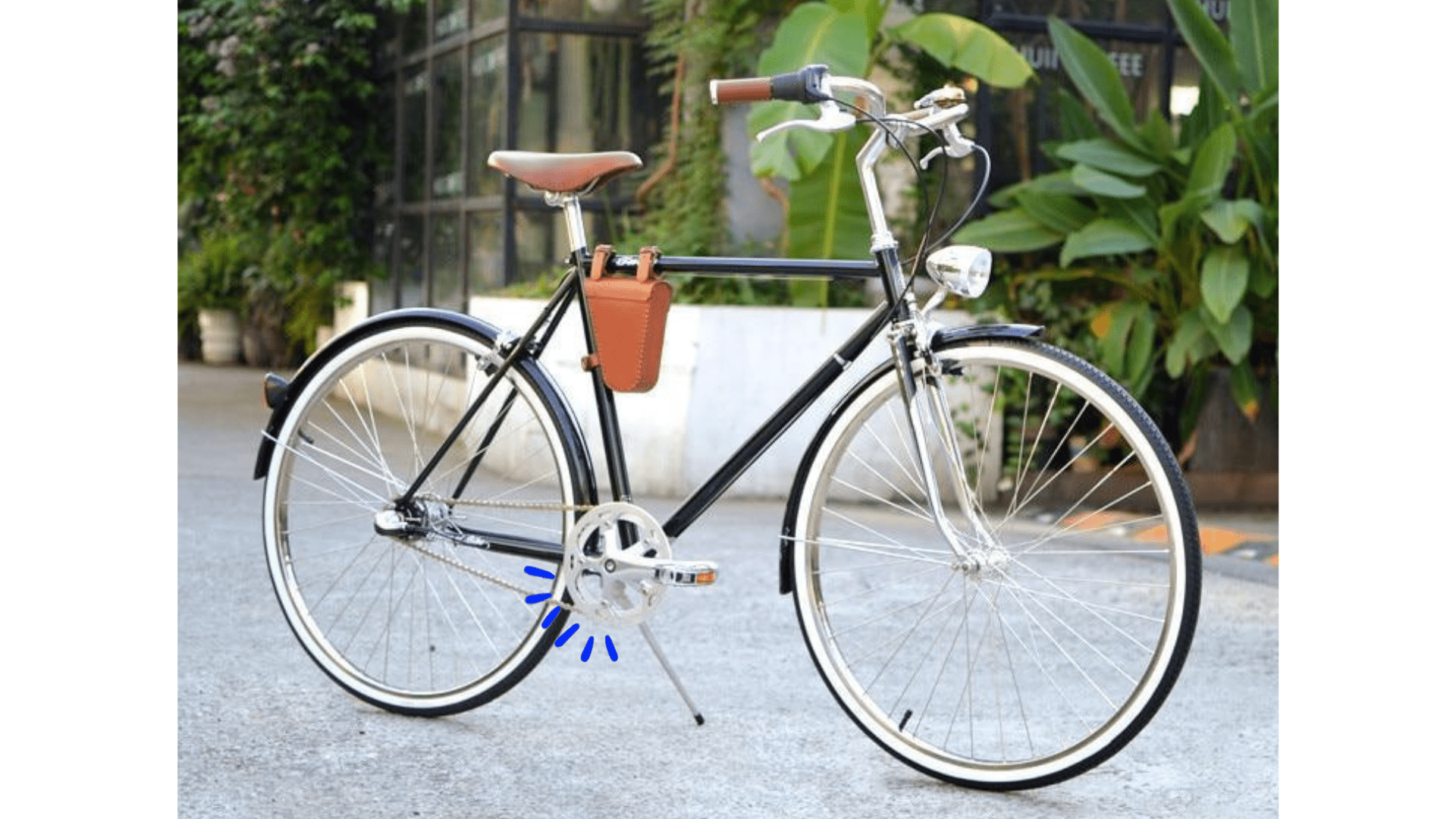
Vintage bicycles tell a story. Whether they date from the 1950s, 1970s, or 1990s, they embody an era, a craftsmanship, a unique style no longer found in today's mass-produced bikes. Yet, as sustainable mobility develops, many enthusiasts wonder if it's possible to reconcile cycling heritage with modern electric technology. Can we truly converting an old bicycle into an electric bicycle without altering it? Is that a good idea? Under what conditions?
Long considered heresy by purists, electrifying a vintage bicycle is now gaining popularity. It allows you to extend the life of an old bike, making it a daily companion, while respecting its character and aesthetics. With the modern electrical kits, More discreet, lighter and more respectful of the original mechanics, it is now possible to revive these two-wheeled icons with an extra level of assistance that does not detract from their charm.
In this article, we'll guide you step-by-step on how to electrify a vintage bicycle without compromising its value, style, or comfort. You'll discover which types of bikes are best suited to this transformation, how to choose your assistance system, and what precautions to take to protect your bike. Whether you own a Peugeot PX10, a 1970s Gitane, a French cargo bike, or an old Dutch bicycle, this guide is for you.
Bringing the past and the future into dialogue has never been so exciting.
The essentials
Do you own a vintage or old bicycle gathering dust in your garage? Instead of letting it collect dust, why not give it a new life by electrifying it? Whether it's a collector's item, an old Peugeot, a 1970s Gitane, or a vintage Dutch bike, it's entirely possible to transform it into an electric bike while preserving its authenticity. With a discreet kit and proper installation, you can combine the elegance of the past with the comfort of modern assistance. In this guide, discover how to electrify your vintage bike without altering its character, model by model, and turn the past into a real solution for the future.
Summary
- Electrifying a vintage bicycle: what you need to know before you begin
- Can an old bicycle support an electric motor?
- What are the risks of electrifying an old bicycle?
- How to preserve the soul of a vintage bicycle?
- What types of vintage bicycles are suitable for electrification?
- Vintage road bikes from the 60s to the 90s
- Old Dutch bicycles and French carriers
- Old, sturdy mountain bikes and all-terrain bikes
- How to electrify a vintage bicycle without altering its character?
- Choose a discreet engine that respects the style
- Where should the battery be installed on a vintage bicycle?
- Adapting the electric assistance to the behavior of an old bicycle
Electrifying a vintage bicycle: what you need to know before you begin
Converting a vintage bicycle into an electric bike is not something to be undertaken lightly. It's not quite the same process as electrifying a modern bicycle or a recent hybrid bike. Here, it's not simply a matter of adding a motor and a battery, but of respecting a certain balance, an aesthetic, and sometimes even sentimental or heritage value. Before embarking on this type of project, several elements must be carefully considered.
Can an old bicycle support an electric motor?
The first question to ask is that of technical compatibility. Not all old bicycles are designed to accommodate electric assistance, at least not without modifications. A vintage bicycle, whether it's a lightweight steel road bike or a sturdy old freighter, was designed in an era when mechanical constraints were not what they are today. Adding a motor and a battery changes the loads exerted on the frame, wheel axles, and sometimes even the brakes.
The good news is that many vintage bicycles, especially those made of steel, are remarkably durable. Steel absorbs stress well and is often better suited to electrification than one might imagine. Provided the frame is sound, without cracks or deep corrosion, and the key components (wheels, brakes, bottom bracket) are in good condition, electrification is entirely feasible. A thorough inspection is essential before starting, even if it means calling in a professional or expert. specialized workshop to check the sensitive points.
What are the risks of electrifying an old bicycle?
Electrifying an old bicycle presents certain risks that must be anticipated. The first is mechanical: under the added weight and electric assistance, a weakened frame could deform or break. The original brakes, often rim brakes on steel wheels, may also prove insufficient to effectively stop an electrified bicycle, especially at higher speeds. It may then be necessary to consider upgrading the braking system with modern brake pads, more efficient calipers, or even adding disc brakes if the frame allows.
Another risk is aesthetic. Poorly integrated electrification can distort the bike's appearance. A large, unsightly motor, a bulky, poorly secured battery, or exposed wiring can ruin the understated charm of a vintage bicycle. The sentimental value, or even the collector's value, of the bike can suffer if the conversion isn't carried out carefully and discreetly.
Finally, the legal aspect should not be underestimated. In France, an electric bike must comply with certain standards to be classified as a bicycle (and not a moped). This includes a maximum speed of 25 km/h, a maximum motor power of 250 watts, and an automatic cut-off of the pedal assist when pedaling is not required.
How to preserve the soul of a vintage bicycle?
Preserving the soul of a vintage bicycle requires respectful and thoughtful technical choices. The goal isn't to transform a vintage bike into a futuristic machine, but to complement its original identity by adding just the right amount of modernity to make it more practical for everyday use. This means choosing a discreet motor, often integrated into a wheel, and a compact battery, ideally hidden or concealed within another part of the bike.
The placement of electrical components must respect the lines of the frame. A battery installed in an elegant bag, integrated wiring along the tubes, a discreet motor in a rear wheel are all solutions that allow you to preserve the look and proportions of a vintage bicycle.
Electrifying a vintage bicycle isn't just about performance; it's also an act of love for the object. It's giving a second life to a beloved companion while honoring its history.
What types of vintage bicycles are suitable for electrification?
Not all vintage bicycles lend themselves equally well to electric conversion.Some models, due to their design, robustness, or geometry, offer a better base than others. Before embarking on electrification, it's important to understand which types of older bicycles can accommodate a motor and battery without major compromises to their safety or aesthetics.
Vintage road bikes from the 60s to the 90s

Vintage racing bikes, very popular between the 1960s and 1990s, provide an excellent foundation for a lightweight electrification project. Designed for performance and reliability, these bikes often feature high-end steel frames, renowned for their flexibility and strength. Iconic models like the Peugeot PX10, the Gitane Olympic, and the Motobécane C5 are all testaments to an era when lightness didn't preclude robustness.
Their clean geometry, with a classic triangular frame and 700mm wheels, facilitates the discreet installation of a rear hub motor. Furthermore, their minimalist design allows for the attachment of a small battery without compromising the overall appearance. With proper care, these vintage road bikes can become stunning neo-retro electric bikes, capable of combining elegance and efficiency for daily commutes or long rides.
Old Dutch bicycles and French carriers

Another ideal category for electrification: vintage city bikes, whether they are sturdy Dutch bikes or the famous French cargo bikes of the 1950s. Designed for transporting heavy loads, these bikes have reinforced frames, often made of steel, capable of easily supporting the addition of a motor and battery.
Their straight geometry, low center of gravity, and practical design make them perfect candidates for electrified utility use. With their sturdy luggage rack and robust frame designed to withstand significant stress, these bikes allow for seamless integration of electric assistance. An electrified cargo bike can thus become a true everyday vehicle, capable of handling errands, commuting, or even transporting children with enhanced comfort.
Old, sturdy mountain bikes and all-terrain bikes

Finally, the first mountain bikes of the 1980s and 1990s, as well as the robust hybrid bikes of the same era, also offer an interesting base. With their wide frames, reinforced wheels, and ability to absorb uneven terrain, they handle the additional stresses generated by an electric motor very well.
These old mountain bikes, sometimes relegated to the back of garages, can be given a second life by becoming urban electric mountain bikes or versatile utility bikes. Their adaptability is a major asset: whether it's tackling cobblestones, country lanes, or climbing steep streets, a well-calibrated electric assist system transforms their potential without compromising their robust nature.
How to electrify a vintage bicycle without altering its character?
Electrifying a vintage bicycle shouldn't be about abruptly imposing modern technology on a piece of the past. The challenge is more subtle: it's about integrating electric assistance while respecting the original spirit, aesthetics, and feel of the bike. Every technical decision, every component choice, must serve to extend the bike's life without erasing its character.
Choose a discreet engine that respects the style
The choice of motor is undoubtedly the most crucial decision in the project. For a vintage bicycle, the motor must remain as discreet as possible to preserve the overall look of the bike.A rear wheel motor is often preferred: it integrates visually better than a front wheel motor, which can unbalance the appearance, and it avoids the heavy modifications that a bottom bracket motor would require.
The weight of the motor must also be considered. On a vintage, lightweight racing bike, for example, an overly bulky motor would disrupt the harmony and compromise the riding experience. It is therefore advisable to choose compact, lightweight motors, ideally designed for smooth and progressive assistance, in keeping with the original bike's design philosophy. The goal is not to transform a vintage bike into a super-powerful machine, but to provide discreet support when the effort becomes too great.
Where should the battery be installed on a vintage bicycle?
Installing the battery presents another major challenge. On a vintage bicycle, the goal is to avoid visually weighing down the frame or compromising its elegant lines. Several solutions exist for integrating the battery without betraying the spirit of the bicycle.
The most discreet solution is to use a battery concealed in a dummy water bottle, placed in the traditional bottle cage. This approach maintains the bike's sporty appearance while providing sufficient assistance for daily commutes or leisurely rides. Other cyclists opt for batteries housed in a stylish frame bag, reminiscent of the vintage leather panniers used by couriers or bicycle tourists.
In the case of cargo bikes or Dutch bikes, it's also possible to attach a battery to the rear rack, provided you choose a compact and well-integrated model. The key is to maintain the bike's aesthetic balance and respect its center of gravity, in order to ensure a smooth and natural ride.
Adapting the electric assistance to the behavior of an old bicycle
An old bicycle doesn't handle like a modern one, and its electrification must respect this difference. It's important to choose an electric kit that offers progressive assistance, sensitive to pedaling, rather than a sudden boost that would unbalance the ride.
The dynamic handling of a vintage bicycle is often smoother and more responsive than that of a modern bike. The assistance system should complement this rhythm without altering its character. This means fine-tuning the assistance levels, prioritizing smooth starts, and retaining the option to pedal without assistance when desired.
Respecting the original design also means preserving as many of the period components as possible: handlebars, saddles, cranksets, if their condition allows. Every detail counts to ensure the bicycle retains its soul, even after its electric rebirth.
Conclusion: Reconciling vintage bicycles with modern mobility
Electrifying a classic, vintage, or old bicycle isn't about turning your back on its history. On the contrary, it's about giving it a second life, making it compatible with the uses and demands of modern mobility. When done well, electrification allows bicycles that have spanned decades to continue their lifespan, respecting their style, lightness, and charm.
Vintage bicycles, whether racing, city, or mountain bikes, were often designed with a robustness and ingenious construction that deserve to be celebrated. At a time when natural resources are more precious than ever, choosing to electrify rather than buy new is also a powerful ecological choice. It helps avoid waste, reduces one's carbon footprint, and demonstrates that innovation and heritage can coexist harmoniously.
The key to this project is remaining true to the spirit of the original bicycle. By choosing discreet components and respecting the bike's aesthetics and dynamic handling, we manage to combine modern comfort with timeless elegance. Far from a simple DIY project, electrifying a vintage bicycle becomes a true art form: a bridge between the memories of yesterday and the needs of today.
Giving a new life to an old bicycle through electrification is to affirm that the bicycle is not just an object of nostalgia, but a living companion, capable of continuing to write stories, generation after generation.
Partager:
How to electrify a Decathlon or Intersport bike ? Our guide for each range
Paris 2024: the boom in electric bicycle kits