
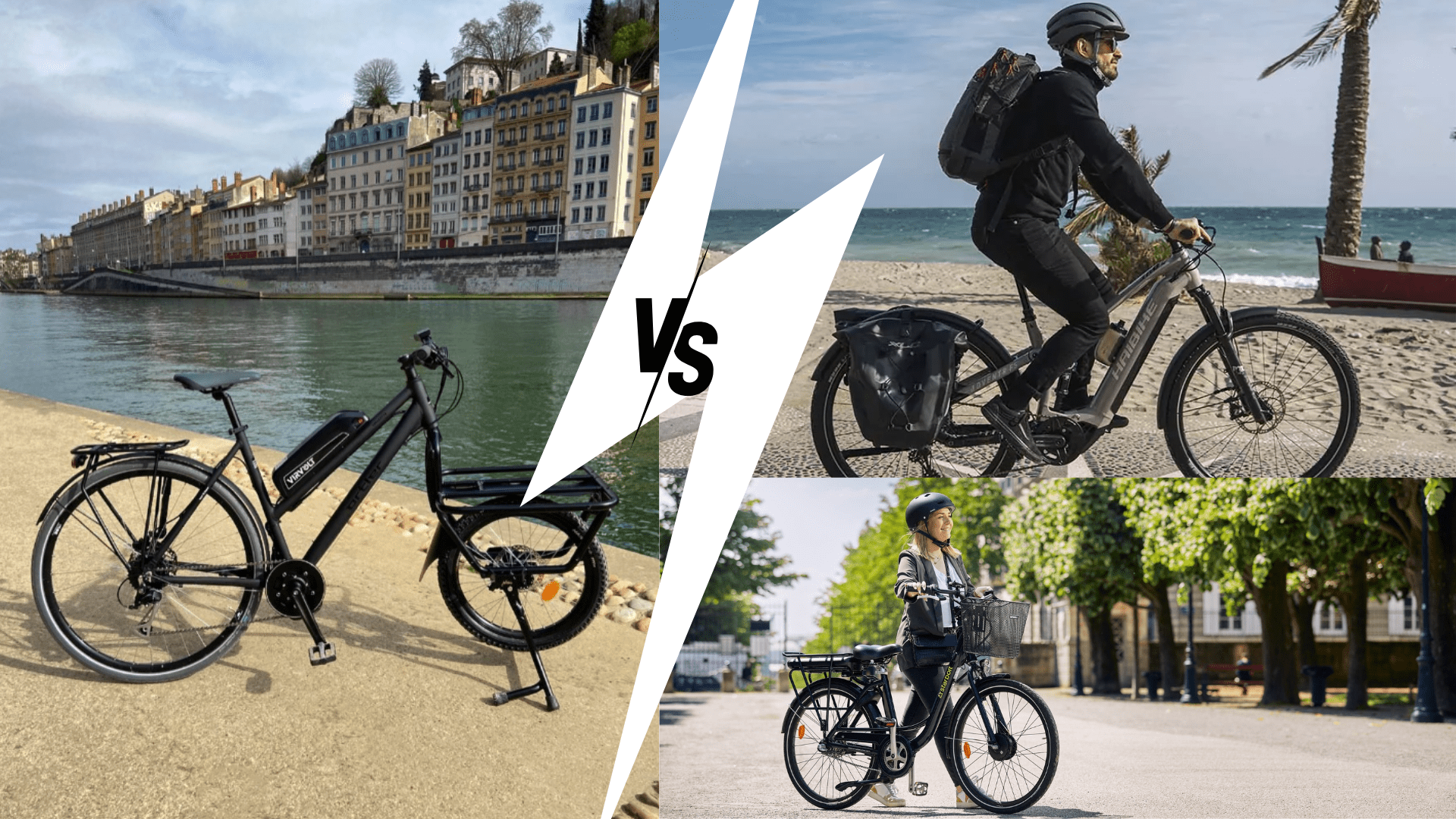
With over 565,000 electric bikes sold in France in 2024, the issue of sustainable mobility has become central. Practical, economical in the long run, and far less polluting than a car, the electric bike is appealing to an ever-growing audience. Faced with this surge in popularity, a dilemma is arising more and more frequently: should you buy a new electric bike or convert your existing one using a [device/tool/etc.]? electrification kit ?
The choice isn't solely based on cost. It also depends on how you'll use it, the type of bike you already own, and even your environmental beliefs. This comprehensive guide reviews every aspect of these two options, highlighting their cost, environmental impact, maintenance, and the quality of the user experience.
Summary
-
Initial cost and long-term expenses
1.1. The detailed purchase cost: between quality and technical options
1.2. Maintenance and upkeep costs over several years
1.3. Price-performance ratio and long-term value -
Environmental impact
2.1. Manufacturing: an energy-intensive and polluting process
2.2. Electrification by kit: a circular and more sustainable approach
2.3. End of life: recycling, recovery and the circular economy -
Maintenance and repairability
3.1. The technical complexity of new e-bikes
3.2. Electrification kits: simplicity and autonomy for maintenance
3.3. Service life of the main components -
Performance and ease of use
4.1. Technical integration and quality of support on new e-bikes
4.2. Kit performance: diversity and limitations
4.3. Comfort and ergonomics -
Adaptability according to needs
5.1. Adaptability of new e-bikes: specialization and constraints
5.2. Electrification kits: modularity and versatility
5.3. Technical compatibility and installation constraints -
Conclusion
1. Initial cost and long-term expenses
1.1. The detailed purchase cost: between quality and technical options
Buying a new electric bike represents an investment that varies considerably depending on the model, brand, and integrated options. Entry-level models cost around €1,500 to €2,000, while mid-range and high-end e-bikes can quickly exceed €3,000 and reach €5,000 or more for highly specialized configurations such as electric cargo bikes or high-performance mountain bikes. The price increase is due to the quality of the frame (materials, design), the motor's power, the battery's capacity and technology, as well as the integration of connected devices (LCD screen, GPS, advanced sensors). These options significantly improve comfort, safety, and reliability, but also considerably increase the price.
Conversely, the electric bike conversion kits, These systems, which come in the form of a motor to be mounted on the front or rear wheel, or a bottom bracket motor, allow you to transform a classic bicycle into an e-bike for an average cost ranging from €500 to €1,200. This price range reflects the quality of the components: more or less powerful brushless motors, lithium-ion batteries with different capacities, and accessories.
Here is an overview of the different types of engines we offer ⬇️

We must also take into account the fact that convert a bicycle Having an existing bike often allows the use of a higher quality frame and mechanical components, as bikes bought a few years ago were often more robust and heavier, unlike the ultra-light but sometimes fragile frames of new electric bikes.
1.2. Maintenance and upkeep costs over several years
Beyond the purchase price, it's important to consider the costs over several years. Maintaining a new e-bike is not financially insignificant. The integrated electrical system requires regular maintenance: checking connections, cleaning contacts, and updating the onboard software. The motor and battery are sensitive components: a battery replacement can cost between €300 and €700 depending on the model and technology used. Specific parts, such as hydraulic brakes, electronic derailleurs, or reinforced tires, are often more expensive to replace than on a conventional bicycle. Furthermore, repairs often need to be carried out by certified specialists, which increases the cost and can lead to significant delays.
Conversely, a electric bike assistance kit It generally offers lower maintenance costs. The kit components are often standardized and modular, making them easy to replace or upgrade. The battery, in particular, is often removable and can be easily replaced, sometimes by the user themselves. Furthermore, maintenance of the underlying classic bicycle remains the same as for a traditional bicycle, with parts often easier and less expensive to source.
That said, the durability of a kit largely depends on the initial quality of the bike and the chosen components. A low-quality bike or a low-end kit can lead to hidden costs related to rapid wear, incompatible parts, or improper installation.
1.3. Price-performance ratio and long-term value
Beyond the initial cost and maintenance, resale value and durability must be considered. A new electric bike, especially from a well-known brand, retains its value better on the used market. A still-valid warranty and confidence in the integrated technology are reassuring factors for potential buyers. Furthermore, recent models often incorporate innovations that increase their appeal.
Converted bicycles presented a more complex profile. Their resale value depends heavily on the quality of the original bicycle and the kit used. Some buyers may hesitate due to concerns about reliability or technical compatibility. However, in a market increasingly valuing the circular economy and repairability, these converted bicycles are also finding their audience, especially among knowledgeable enthusiasts.
2. Environmental impact
2.1. Manufacturing: an energy-intensive and polluting process
The production of a new electric bicycle has a significant carbon footprint. This includes the extraction of raw materials, notably aluminum for the frame, the manufacturing of which is very energy-intensive, as well as rare metals such as lithium, cobalt, and nickel, used in the battery. The extraction of these resources is often associated with serious environmental impacts, including soil pollution, water consumption, and greenhouse gas emissions.
The manufacturing of electronic components is also complex and requires clean conditions to prevent contamination, which increases energy consumption and industrial waste. The assembly phase, generally carried out in countries with high industrial production, adds its own share of pollution and emissions related to international transport.
It is estimated that a new electric bike generates approximately 150 kg of CO₂ from its manufacture, an amount that will need to be offset by regular and sustainable use of the bike in order for the balance to remain positive.

2.2. Electrification by kit: a circular and more sustainable approach
Converting a classic bicycle with a kit extends the lifespan of already manufactured equipment, thus reducing environmental impact. By avoiding the production of a new frame, the production of spare parts is primarily focused on the electrical components of the kit.
The savings in natural resources and energy can reach 70 to 80% compared to buying a new e-bike. This approach aligns with the logic of reducing waste and extending product lifespan, two essential levers for the ecological transition.
2.3. End of life: recycling, recovery and the circular economy
The question of end-of-life is crucial for lithium-ion batteries, the most polluting component of electric bikes. Battery recycling is beginning to take shape, with dedicated channels that allow for the recovery of precious metals and raw materials, but this activity remains insufficiently developed and costly.
Manufacturers of new e-bikes often offer take-back or recycling programs, but their effectiveness varies between brands and countries. For conversion kits, the diversity of manufacturers complicates the establishment of a single recycling system, requiring collective awareness to prevent waste dispersal and pollution.
The modularity of the kits, which allows the battery to be replaced without throwing away the entire bike, is an important advantage in the perspective of a circular economy, reducing the production of electronic waste and promoting repair.
3. Maintenance and repairability
3.1. The technical complexity of new e-bikes
New electric bikes are often designed with a high degree of technical integration. The motors are usually concealed within the frame or rear wheel, the battery is sometimes fully integrated into the downtube, and the cables are hidden within the frame. This integration optimizes the bike's aesthetics, comfort, and reliability, but significantly complicates any technical intervention.
Electronic components, such as torque sensors (which detect the force applied to the pedals), motor control systems, and smart batteries, require specific expertise for diagnosis and repair. Most manufacturers require repairs to be carried out through their network of authorized workshops, thus ensuring adherence to procedures and the availability of specific parts.

However, this centralization of maintenance poses several practical problems. First, the costs of interventions are often high, due to the technical nature of the work, the need for specialized tools, and the requirement for trained personnel. A simple battery replacement or electrical issue can cost several hundred euros.
Secondly, the availability of spare parts can be a major obstacle.Some electronic parts are proprietary, meaning they can only be replaced with parts from the same brand, limiting competition and flexibility.
Finally, the bike's downtime can be lengthy, which is problematic for users who rely on their e-bike daily for commuting or deliveries. These constraints can discourage some owners and contribute to premature bike replacement, compromising durability.
3.2. Electrification kits: simplicity and autonomy for maintenance
Conversely, electrification kits offer a much more open and accessible approach to maintenance. Their modular design is based on standard components (motor, battery, controller, sensors) that can be individually disassembled, repaired, or replaced.
This flexibility also facilitates the gradual upgrading or improvement of the electrical system. For example, it is possible to replace the battery with a more efficient model, or to change the motor to a more powerful one without having to buy an entire new bicycle.
However, this freedom comes with a certain responsibility: the user must possess a minimum level of technical skills or seek the assistance of qualified professionals. Improper installation or neglected maintenance can compromise the safety and performance of the bicycle.
Finally, some low-end kits can suffer from inconsistent quality, with less durable components, which can lead to rapid wear or frequent breakdowns. It is therefore crucial to choose a quality kit from a reputable manufacturer to ensure a good balance between cost, reliability, and performance.
3.3. Service life of the main components
The heart of an e-bike or kit's electrical system rests on three main elements: the motor, the battery, and the electronic controller. Each of these has its own lifespan, which determines the overall longevity of the system.
The engine
Whether integrated into a new e-bike or included in a kit, the brushless electric motor is a robust component. With proper maintenance, it can operate efficiently for 10 to 15 years. Mid-drive motors, which transmit power directly to the chain, are generally more powerful but also subject to greater mechanical stress. Front or rear hub motors are easier to replace but can be more susceptible to impacts and moisture.
The battery
The battery is often the weakest link in terms of durability. Lithium-ion batteries used today offer high energy density but suffer from gradual degradation over charge cycles. On average, a battery lasts between 500 and 1,000 cycles, which corresponds to 3 to 5 years of regular use.
In a new e-bike, the battery is often integrated and its replacement can be costly and complex, whereas in a kit, the battery is usually removable and easily replaceable.
The controller and the electronics
The controller acts as the brain of the system, managing the power delivered to the motor based on data received from the sensors. It's a sensitive component that can suffer from problems related to humidity, vibration, or power surges. Repairing or replacing the controller can be expensive on new e-bikes but simpler and more economical on kits.
Onboard electronics, including screens and sensors, are often the source of the most frustrating failures.Here again, the modularity of the kits facilitates diagnosis and repair, whereas on integrated e-bikes, the complexity can lead to long and costly repairs.
4. Performance and ease of use
4.1. Technical integration and quality of support on new e-bikes
New electric bike manufacturers are investing heavily in integrating their motor systems to offer smooth, intuitive, and quiet assistance. Torque sensors precisely measure the rider's effort and adjust the motor's power output in real time. This fine-tuning allows for a natural pedaling feel, without jolts or excessive effort.
Integrated frame batteries optimize the center of gravity, improving bike stability and handling. All components are calibrated to work in harmony, ensuring maximum energy efficiency and a range often exceeding that of entry-level kits.

4.2. Kit performance: diversity and limitations
Electrification kits vary enormously in quality and performance. High-end models sometimes rival new e-bikes, offering powerful motors, high-capacity batteries, and advanced electronic systems. However, many entry-level or mid-range kits offer less progressive assistance, resulting in a less smooth feel during start-up or acceleration.
Furthermore, the kits generally do not have the advanced electronic aids of new e-bikes, such as integrated anti-theft systems, real-time diagnostics, or adaptive riding modes.
4.3. Comfort and ergonomics
Ease of use depends not only on the performance of the motor or battery, but also on the overall ergonomics of the bike. On a new e-bike, the frame, saddle, handlebars, and suspension are designed to offer a pleasant experience, with optimized settings.
Integrated accessories, such as LED lighting, mudguards, luggage racks, and connectivity systems, contribute to practical everyday use.
With conversion kits, comfort depends on the original bicycle. If it's well-suited to the rider, the conversion can yield satisfactory results. However, installing a kit on a poorly adjusted or ill-equipped bicycle can significantly reduce comfort, especially if the added weight of the motor or battery unbalances the bike.
5. Adaptability according to needs
The choice between a new electric bike and an electrification kit isn't just about cost or performance. It's also deeply linked to how you intend to use your bike. Indeed, needs vary depending on the type of activity, traffic conditions, frequency of use, and specific features you're looking for.
5.1. Adaptability of new e-bikes: specialization and constraints
New electric bikes are often designed and optimized for a very specific use. There are specific models for city riding, mountain biking, trekking, cargo, or even folding bikes. This specialization ensures that the bike perfectly meets the requirements of its intended purpose, whether in terms of frame, suspension, robustness, or load capacity.
However, this specialization also implies a lack of flexibility. An e-bike designed for the city will not be efficient or comfortable on forest trails, and vice versa. Furthermore, modularity is limited: changing the battery or motor for a different use is often impossible or expensive.The bicycle is conceived as a finished and closed product.
This rigidity can pose a problem for a user whose needs change, who moves to a region with different conditions, or who wants to use several bikes depending on the situation.
5.2. Electrification kits: modularity and versatility
Conversely, electrification kits offer great flexibility, as the system is detachable and portable. The same kit can be installed successively on different bicycles, provided they are compatible. This allows a user to easily adapt to their changing needs without making multiple investments.
Choosing the right type of motor (front hub, rear hub, or mid-drive) and battery capacity also allows you to precisely calibrate the desired power and range. For example, for city riding on flat terrain, a front hub motor kit with a lightweight battery may suffice. For mountain riding or carrying heavy loads, a mid-drive motor with a powerful battery will be preferable.
5.3. Technical compatibility and installation constraints
While the modularity of the kits is an advantage, it also means verifying technical compatibility with the existing bicycle. Some frames are not suitable for accommodating an additional motor or battery, particularly very old bicycles, fragile carbon frames, or folding bikes with unusual dimensions.
Furthermore, installing the kit may require mechanical modifications, such as changing the wheels, adding battery mounts, or modifying the braking system to ensure safety. Failure to take these precautions can lead to malfunctions, premature wear, or risks to the cyclist.
New e-bikes, on the other hand, are delivered ready to use, with perfectly compatible components and a factory setting that ensures optimal operation.
For less experienced users, this point may be a deterrent to using a kit, whereas buying a new e-bike guarantees a quick and trouble-free start.
6. Conclusion
Choosing between a new electric bike and an electrification kit is complex and must be considered based on many criteria: budget, use, technical skills, ecology, and specific needs.
A new e-bike offers an integrated, comfortable, and turnkey solution, ideal for beginners, professionals, or those seeking reliability above all else. The electrification kit, more flexible, economical, and environmentally friendly, is aimed at experienced cyclists, families, or users concerned about their environmental impact.
Each option has its advantages and limitations. The key is to carefully analyze your needs and profile to choose the solution that will allow you to fully enjoy the benefits of electric mobility.
Partager:
Complete guide to converting your bike into an electric bike with an electrification kit in 2025
Mechanical doping: when bicycle electrification technologies betray the spirit of professional cycling