
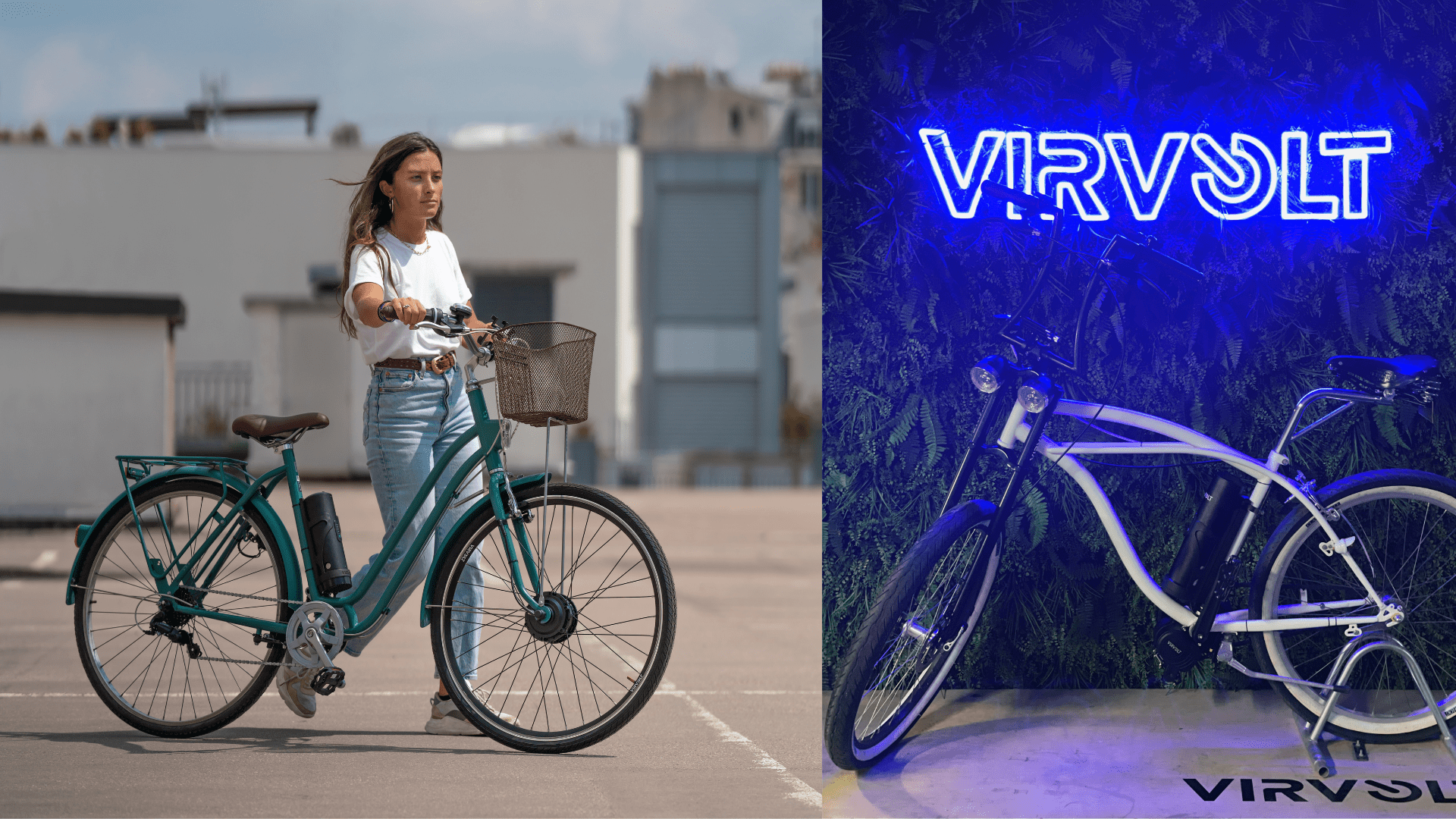
Today, more and more cyclists are choosing toelectrify their bike with a electrical kit. This solution is appealing due to its flexibility, lower cost compared to buying a new electric bike, and compatibility with many existing models. However, despite its growing popularity, this option is still surrounded by numerous misconceptions that deter some users. Excessive weight, limited range, questionable legality, potential danger, and limited compatibility: these are all beliefs that need to be qualified, or even debunked.
Thousands of electric assistance kits were sold in France between 2020 and 2024. This figure continues to rise, thanks in particular to technological advancements, support from local authorities, and increasing awareness of sustainable mobility. However, a gap remains between growing public interest and the mistrust still fueled by certain prejudices.
In this article, we will deconstruct the 5 of the most common misconceptions on theelectrification with a conversion kit. The goal: to help you see things more clearly and make an informed decision, safely.
Summary
-
Myth #1: An electric bike is too heavy
-
Myth #2: An electric bike has a short range
-
Myth #3: It's dangerous to electrify your bike
-
Myth #4: Electric kits are not compatible with all bicycles
-
Myth #5: Electrifying a bicycle is illegal or legally complicated
-
Conclusion
1. Myth #1: An electric bike is too heavy
Why is weight such a concern?
When we talk about a electric bike kit, The first concern often revolves around weight. Many cyclists, especially those who use their bikes daily or in urban areas, worry about excessively weighing down their bikes and losing agility or riding comfort. This fear is not unfounded: a heavier bike is more difficult to maneuver when stopped, to carry up stairs, or to lift onto a bike rack.
But is this excess weight really a hindrance on a daily basis? And above all, is it as significant as we imagine?
How much does an electrification kit really weigh?
A electric motor kit It generally comprises three elements: the motor (in the wheel or at the bottom bracket), the battery, and the controller. Depending on the chosen configuration, the total weight can vary from 4 to 7 kg.
Let's take the example of a bottom bracket motor kit with a 500 Wh battery:
-
Bottom bracket motor: 3 to 4 kg
-
battery: 2 to 3 kg
-
Controller + cabling: approximately 500 g
This weight is added to that of the original bicycle (often between 12 and 15 kg for a classic bicycle), giving us an electrified bicycle of 16 to 22 kg on average. In comparison, a new electric bike trade generally weighs between 23 and 28 kg.
It then becomes clear that electrification by kit is often lighter than buying a ready-made e-bike.
Being overweight...compensated by assistance
The other element not to be overlooked is that this excess weight has little impact when the engine is activated. Thanks to the assistance, hills become easy, starts at traffic lights are smooth, and even long distances are effortless. The weight is only really noticeable in two situations:
-
when you push the bike by hand (stairs, pedestrian crossing, etc.)
-
if you pedal without assistance, for example in the event of a dead battery
But here again, the new generations of electric bike kits They are designed to minimize friction. A disengaged mid-drive motor generates almost no resistance. As a result, the bike remains usable without assistance, even if the effort required is slightly greater.
Innovations to lighten things even more
Manufacturers are actively working to reduce the weight of components:
- The front wheel motors pass under the 2.5 kg
- Some batteries fit into bottle cages Or removable bags lightweight
- Lightweight materials (aluminum, carbon) are increasingly used in the manufacture of kits
At Virvolt, for example, the Virvolt 900 Kit weighs 5.6 kg, including motor and battery, and allows for converting an electric bike while remaining under 20 kg in total. That's 10% lighter than many e-bikes on the market.
In summary
Yes, a kit adds weight to a bike, but this extra weight is largely offset by the benefits of assistance. By choosing a kit adapted And by taking into account the type of activity (urban, leisure, hiking), it is entirely possible to maintain a a maneuverable, balanced and high-performance bicycle.
The question of weight should therefore not no longer be a hindrance to your electrification project. What matters is Choosing the right kit for your electric bike, and adapt it to your needs.
2- Myth #2: An electric bike has a short range
Autonomy: an obsession for users
As soon as we start talking about bicycle conversion kit, The question of battery range comes first: "Will I have to recharge my battery every day?", "Will I run out of power mid-ride?". These questions are legitimate: unlike a conventional bicycle, a electric bicycle depends on the electrical energy supplied by its battery. However, Fears surrounding autonomy are largely exaggerated., and do not always take into account recent technological advances.
What determines the range of an electric bike kit?
The actual autonomy of a electric assistance kit depends on a number of factors, the main ones being:
-
Battery capacity (expressed in Wh)
-
Total weight (bicycle + cyclist + load carried)
-
Engine type (hub or crankset)
-
Selected level of assistance
-
Relief of the route (flat, hilly, mountainous)
-
Weather conditions (headwind, low temperatures)
-
Tire pressure and transmission quality
It is therefore impossible to assign a universal value to autonomy. But we can work with realistic estimates for the most common uses.
What level of autonomy can we realistically expect?
Here are some price ranges based on frequently installed kits:
-
A battery 250 Wh offers a battery life of 25 to 45 km
-
A battery 360 Wh allows rolling 35 to 70 km
-
A battery 500 Wh can cover 60 to 100 km, or even more with an efficient mid-drive motor
-
Batteries large (600-700 Wh) go up to 120 km, especially in the city
An overview of our water bottle batteries (252Wh for the beginner and 378Wh for the standard) 🪫

Let's take a concrete example: a 75 kg user, equipped with a 15 kg electric city bike with a bottom bracket motor kit and a 500 Wh battery. On an urban route with little elevation gain and a moderate level of assistance, it will be able to travel between 80 and 100 km before needing to recharge.
For a mountain bike equipped with a electric mountain bike kit, Consumption will be slightly higher due to the more demanding terrain. But even then, with a 500 to 600 Wh battery, we achieve 70 to 90 km in eco mode.
Is it possible to increase the battery life?
Absolutely. Here are a few good practices to optimize your battery life and get the most out of your electric bike kit :
-
Choose an appropriate level of assistance: there's no need to use "turbo" mode all the time.
-
Inflate your tires correctly: an underinflated tire increases rolling resistance.
-
Pedal at a steady cadence to conserve energy.
-
Anticipate your braking and acceleration to avoid fuel consumption spikes.
-
Avoid riding with an excessive load (heavy backpack, unnecessary accessories).
Some models also offer the option dual battery, which allows you to double the range by connecting two batteries to the same motor.
What happens if the battery is empty?
Unlike an electric car, an electric bike remains... a bike. Even if the battery is empty, you can still keep pedaling. If you have opted for a bottom bracket motor kit, The resistance to pedaling is virtually zero.If it's a wheel motor, the resistance may be slightly noticeable, but never blocking.
In other words, a dry breakdown It's never dramatic: you'll finish your journey with a little more effort, but safely.
The right battery life choice for your needs
-
For a urban use For daily commutes of less than 10 km: a 250 to 360 Wh battery is more than sufficient.
-
For a leisure use or long-distance commuting : Opt for 500 Wh or more.
-
For the hiking or bikepacking : Consider a capacity of 600 Wh or more, or even a dual battery.
The good electric mountain bike kit or urban therefore depends on your user profile, not a single truth.
Below is our 900 engine, a concentrated dose of power made in France. 🇫🇷 ⬇️

3. Myth #3: It's dangerous to electrify your bike
The fear of danger: where does it come from?
Electrifying a bicycle still raises safety concerns. Some imagine a bike that will be difficult to control, too fast, or prone to sudden electrical failure. Others worry that adding an electric motor will reduce stability or make braking ineffective. These concerns can deter cyclists eager to switch to electric. electrification kit.
But what is the reality? Is electrifying a bicycle riskier than electrifying a conventional bicycle?
Standards and regulations for safe bicycle electrification
It is important to remember that all the electric motor kits Electric bikes sold in Europe must comply with strict standards: they must deliver a maximum power of 250 watts, limit assistance to 25 km/h (beyond which the motor automatically shuts off), and the motor must only activate when pedaling, with an exception for starting assistance up to 6 km/h without pedaling. This legal framework guarantees safe use, preventing uncontrollable over-powering.
Furthermore, the battery, which is the main source of danger (risk of fire, overheating), is now protected by intelligent systems (BMS – Battery Management System). These systems monitor temperature, charging, and discharging, thus preventing any risk of short circuits or overheating.
The electric bike remains maneuverable and stable
Contrary to popular belief, an electric bike with a electric bike kit When properly positioned, the bike maintains excellent handling. The additional weight is distributed evenly (often at the bottom bracket or rear wheel), which helps maintain the bike's stability. Furthermore, modern components such as suspension and hydraulic brakes contribute to safe riding, even on rough terrain.
Mountain biking kits are specifically designed for demanding uses and are often equipped with high-torque motors offering precise control of the power delivered.
And what about the brakes?
Some fear that the extra weight and increased speed will make braking less effective. However, it is advisable, when installing a electric assistance kit, to check and sometimes reinforce the brakes. Switching to hydraulic disc brakes is a common and very effective solution to meet this requirement.
Powerful and progressive braking is also a key element to compensate for the potential speed reached with the assistance.
Cases of breakdowns and risk management
In the event of an electrical failure (dead battery, motor problem), the bicycle remains fully controllable. The cyclist then reverts to a conventional bicycle, thus ensuring safety.
Furthermore, electrifying a bicycle does not diminish the need for vigilance on the road. As with all cycling, it is essential to respect the rules of the road, wear a helmet, and ride carefully.
Testimonials and feedback
Many users of electric motor kit They report that after a short adjustment period, they feel safer in the city thanks to the smoother acceleration and better visibility due to the constant speed. Cyclists also report less fatigue, and therefore more attention on the road.
A study conducted by INRETS (National Institute for Transport and Safety Research) even showed that electric bikes do not significantly increase the risk of accidents compared to conventional bikes.
What are the key takeaways?
Electrifying a bicycle, when done with compliant and correctly installed equipment, is no more dangerous than riding a traditional bicycle. On the contrary, it can contribute to safer riding thanks to better bike control and less fatigue.
The key is to choose your electrification kit, to have the brakes, frame and components checked, and to adopt responsible driving habits.
At Virvolt, to guarantee the best possible installation, these are our distributors who carry it out.
4. Myth #4: Electric kits are not compatible with all bicycles
The fear of incompatibility
One of the major obstacles to the electrification of a bicycle via a electrical kit The fear is that the kit won't be compatible with the bike model they own. Many people think that only certain types of bikes can accommodate a electric motor kit, that it requires extensive modifications or that the bike could be damaged.
This misconception limits the democratization of electrification kits, whereas in reality, the offer is much more flexible and accessible.
Which bicycles can be electrified?
One of the great advantages of conversion kits is their ability to adapt to a very wide variety of bikes: mountain bikes, city bikes, road bikes, folding bikes, cargo bikes, and even some vintage bikes.
Here are the three main types of kits and their compatibility:
-
Front wheel kit : Replaces the front wheel with a motorized wheel, easy to install on almost any frame with space for the wheel and battery. Ideal for city bikes and folding bikes.
-
Rear wheel kit : replaces the rear wheel with a motorized wheel. Suitable for most classic frames, this type of kit simply requires checking the available space for battery installation and neatly integrating the cables along the frame.
-
Bottom bracket motor kit : More technical to install, but offers excellent balance and better support. Compatible with all frames that have a BSA standard bottom bracket.

What checks should be carried out before purchase?
To ensure the compatibility of the electric bike kit, You need to check certain key points on your bike:
-
The type of brake (disc brake, rim brake)
-
The width and type of wheel attachment
-
The type of bottom bracket
-
The diameter of the wheels
-
Sufficient space to install the battery
Most kit manufacturers provide guides and detailed technical data sheets to assist in this choice.
Adaptation and personalization
Many kits are now modular: you can choose the motor power, battery capacity, or even the installation position. Some kits integrate smart sensors to adapt the pedal assist, offering a customized experience.
Furthermore, the accessories (console, handles, cables) are often universal or easily adaptable.
At Virvolt, our range allows you to electrify both traditional road bikes and mountain bikes or cargo bikes. Our electrification kits are designed to withstand all conditions while fitting most modern frames.
HAS keep in mind
The belief that bicycle electrification kits The idea that bicycles are reserved for certain types of bikes is largely outdated. With the right information and a suitable choice, it is possible toelectrifying a bicycle It works almost regardless of the model. Compatibility is now a well-established issue, with a wide range of solutions available.
5- Myth #5: Electrifying a bicycle is illegal or legally complicated
Why does this misconception persist?
Many hesitate to take the plunge.bicycle electrification out of fear of legal problems. We often hear that transforming a bicycle into an electric bicycle would be a prohibited modification, that the bicycle would become a moped subject to strict rules, or even that it would require specific insurance, a license or registration.
These fears are hindering the adoption of electric kits, even though European legislation is now clear, but it still needs to be respected.
European and French legal framework
In Europe and France, an electric-assist bicycle (e-bike) is defined by the Directive 2002/24/EC such as a bicycle equipped with an electric motor with a maximum rated power of 250 watts, which only assists the cyclist up to 25 km/h and where the motor must only activate when pedaling, except for start-up assistance up to 6 km/h. These criteria are strictly regulated to ensure that the bicycle remains a bicycle in the legal sense.
Install a conversion kit Respecting these limits does not change the nature of the bicycle.There is still one bicycle, with the same obligations:
-
No license required
-
No mandatory insurance (unless used professionally)
-
No registration
-
Use on the same roads as regular bicycles
What are the limits to be respected?
For your electric bike to be legal, you must:
-
The maximum power of the motor should not exceed 250 W.
-
The electric assistance cuts off at 25 km/h.
-
The assistance only works when you pedal (no autonomous motor) with an exception for start-up assistance up to 6 km/h without pedaling.
THE electric motor kits Approved kits comply with these standards. Therefore, it is essential to verify that the chosen kit has CE certification and conforms to regulations.
What happens if we exceed these limits?
If a more powerful motor is installed or the 25 km/h cut-off is deactivated, the bicycle loses its warranty and is then considered a moped. It then no longer falls into the category of electric-assist bicycles, which increases the constraints.
Control and responsibilities
In the event of an inspection, the authority will verify the bicycle's compliance with regulations. With a electric assistance kit If it is compliant and correctly installed, you will have nothing to worry about.
On the other hand, a non-compliant installation can lead to penalties, ranging from a fine to confiscation of the vehicle in the event of a serious offence.
Tips for staying within the law
-
Choose one electric bike kit approved and compliant with regulations
-
Have your kit installed by a professional or carefully follow the instructions.
-
Do not modify the original settings of the kit (power, speed)
-
Keep the documents and certificates related to the kit
Key points to remember on legality
L'electrification of a bicycle Using a conversion kit is perfectly legal if you comply with current regulations. It's a simple, accessible solution, fully compatible with urban use, leisure, or commuting. This legal certainty allows you to ride with complete peace of mind and fully enjoy the benefits of electric bikes.

6- Conclusion
Electrifying a bicycle is a flexible, economical, and ecological solution for modernizing your bicycle while enjoying pedal assistance. common misconceptions Concerns about weight, autonomy, danger, compatibility and legality are often exaggerated or superseded by technical advances and clear regulations.
Choose a electric motor kit Adapting it to your bike and your use, respecting the installation instructions and riding safely will allow you to get the most out of this technology.
If you would like to learn more about our kits or are ready to take the plunge, please feel free to consult our other articles and detailed guides.
And you? Have you already taken the plunge? Feel free to leave a comment or share this article with other cyclists seeking autonomy and freedom.
Partager:
Which electric bike kit to choose in 2025 ?
Top 10 mistakes to avoid when electrifying your bike