

The used bicycle market is booming. In France, tens of thousands of bicycles sold in 2024 were second-hand. Among these refurbished or privately resold models, an increasing number have already undergone a... bicycle electrification, often thanks to a kit installed after purchase. The idea of converting a bicycle into an electric bike is appealing: it avoids the cost of a new e-bike while still providing pedal assistance.
But buying a pre-modified bike isn't without risk. A poorly assembled bike might have a failing battery, a non-compliant motor, or a questionable installation. And when converting a bike into an electric one, the quality of the assembly is just as important as the materials used.
For those who aren't mechanically inclined or who want to reliably electrify their bike, it's best to have the bike inspected by a professional. Virvolt certified installer. Better still: starting with a healthy muscle bike and converting it into an electric bike with an approved kit often remains the safest, most durable… and sometimes most economical solution.
Things to remember before buying a used electric bike
- Check that the kit is compliant : the motor must not exceed 250W and the assistance must cut off at 25 km/h to remain legal on public roads.
- Assess the battery condition : After 3 years or 500 cycles, battery life can be reduced by half. Without a receipt or service history, be cautious.
- Inspect the quality of the assembly : Messy cables, poorly secured components or a makeshift installation can reveal structural weaknesses.
- Check the condition of the basic bike : transmission, brakes and wheels must be in excellent condition to withstand the additional stresses of the engine.
- Prioritize expertise : If any doubt remains, have the bike inspected by an authorized Virvolt installer or start from a clean slate with a new kit installed on your own bike.
Summary
- Is the electrification kit reliable and legal?
- What is the power output of the installed kit?
- Is the engine suitable for your needs?
- Are there any guarantees or certifications?
- How to assess battery life and condition?
- Is the battery still reliable?
- Can we test the actual battery life?
- What are the signs of a battery failing?
- Was the installation done correctly?
- Are the cables properly integrated?
- Do the screen and controller work?
- Is the assembly secure?
- What should I ask the seller before finalizing the purchase?
- What questions should you absolutely ask?
- What documents should be requested?
- How to negotiate a good price?
1. Is the electrification kit reliable and legal?
Buying a used bike already equipped with bicycle electrification kit It may seem convenient. But it's only a good deal if the installed system meets standards and has been carefully chosen. Before even discussing performance or range, it's essential to ensure that the motor is legal, suitable, and traceable.
What is the power output of the installed kit?
The first thing to check is the kit's power and specifications. In France, regulations stipulate a maximum motor power of 250 watts and assistance limited to 25 km/h. Beyond that speed, the bicycle falls into the moped category and requires registration, an approved helmet, and specific insurance.
A Virvolt electric bike conversion kit, certified and made in France, guarantees compliance with these limits. However, some unscrupulous sellers install imported kits without CE certification, sometimes boosted to 500 or 750W. On paper, it sounds appealing. In reality, it's illegal for use on public roads—and potentially dangerous.
Before buying, ask for the purchase invoice for the kit or a precise product reference. This will allow you to verify the power, its conformity, and possibly find instructions or spare parts on the manufacturer's website.
Is the engine suitable for your needs?
There are several types of motors for electrifying a bicycle: in the front wheel, in the rear wheel, or at the bottom bracket. Each has its own specific characteristics.
A rear-wheel motor, like the Virvolt 950, is recommended for heavy-duty applications. It offers a good balance between power and quiet operation. Conversely, a front-wheel motor is often simpler to install but can provide a slightly unusual pulling sensation.
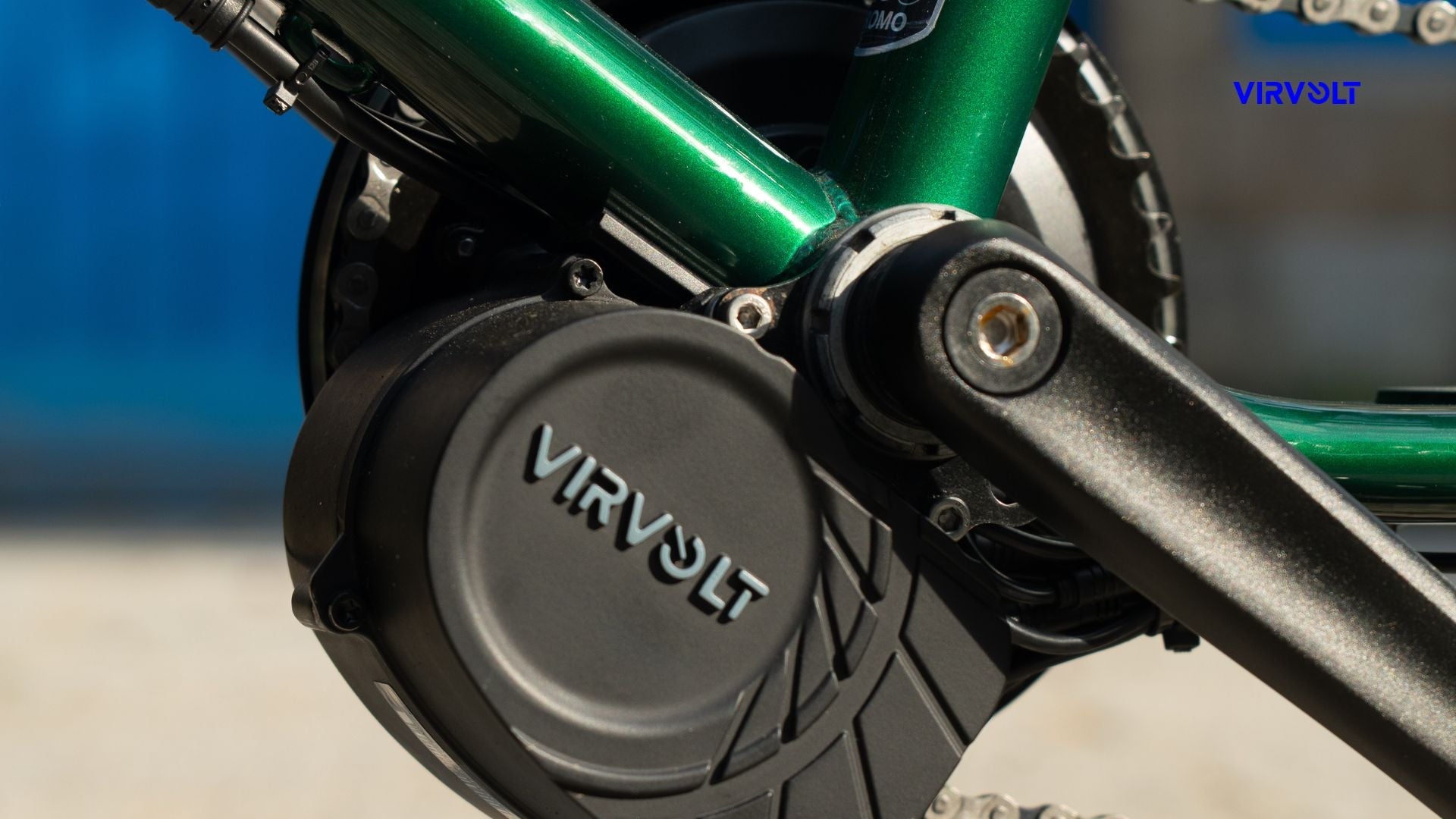
A mid-drive motor, positioned at the bottom bracket, offers more natural assistance but often requires more complex modifications. It is rarely retrofitted to used bicycles, as it demands more expertise and specialized tools.
If you're looking to use the bike for regular urban commutes, a rear motor remains the most balanced choice. For off-road or long-distance use, it's best to consider a higher-end bike or install a kit yourself that suits your needs.
Are there any guarantees or certifications?
Good electrification kits are CE certified, include an installation manual, and often come with a 2-year manufacturer's warranty. If the seller cannot provide these items, there's a good chance the kit was purchased online from a poorly regulated marketplace with no real after-sales service.
This presents two problems. Firstly, in the event of a breakdown, it will be difficult to find a repairer or a compatible part. Secondly, some bike shops will simply refuse to work on a bicycle with an unknown or non-compliant system.
The best option is to choose reputable kits like ours, installed by certified partners. This guarantees quality and durability. If the bike was electrified by a professional, ask for proof of installation: an invoice, stamp, or service certificate.

2. How to assess battery life and condition?
On an electric bike, the battery is both the most valuable component… and the most fragile. However, in the case of a used bike that has already been converted, it's often difficult to know its actual history. Checking the condition of the battery in an electric conversion kit is therefore an essential step before buying.
Is the battery still reliable?
The average lifespan of a lithium-ion battery — the most common type for electric bikes — is between 500 and 800 full charge cycles. This represents between two and five years of regular use.But beware, not all cycles are created equal: a battery that has been poorly stored, completely discharged or exposed to heat can degrade much more quickly.
Before buying a used bike, ask for the battery's commissioning date. If the seller doesn't know, try to identify the part number on the battery pack to determine the model. A battery over three years old that hasn't been replaced or tested is risky: even if it still works, its range may be halved.
When in doubt, it's best to budget for the cost of a replacement. On some kits, like those from Virvolt, the battery is modular and can be changed independently of the rest of the system.
Can we test the actual battery life?
A battery can appear visually intact… while offering very limited range. To avoid unpleasant surprises, the best approach is to perform a real-world test: a 10 to 15 km drive, monitoring the battery gauge, first in eco mode and then in normal mode. This provides a good indication of its performance.
Alternatively, you can use a battery tester (some bike shops offer them for a few tens of euros) which measures the voltage, the actual charge level and sometimes the internal resistance.
On the second-hand market, some reputable sellers already offer tested and refurbished bikes with a warranty.
If you wish to avoid this uncertainty, installing your own new battery on an existing bike remains a much more predictable — and reassuring option.
What are the signs of a battery failing?
Certain anomalies should alert you immediately. If the battery:
- heats up quickly
- takes an abnormally long time to load
- loses several bars at once while running
- presents swelling or a deformed shell
…so it's best to steer clear. These signs indicate advanced wear or a manufacturing defect. Worse, a damaged battery can pose a safety risk if it's poorly protected.
A well-maintained battery, stored at room temperature and partially charged, retains its performance longer. This is also why installation by a certified professional is a real advantage: it guarantees proper use of the charging cycles and a configuration adapted to the engine.
3. Was the installation carried out correctly?
A good kit can be useless—or even dangerous—if it's been installed incorrectly. And on the used market, sloppy installations are common. Installing a bicycle electrification kit requires a certain level of expertise: choosing the right components, fine-tuning, routing the cables, balancing the weight… All these elements affect safety, durability, and riding comfort.

Are the cables properly integrated?
One of the most obvious signs of a poor installation is messy wiring. If you see dangling wires, misaligned cable ties, or split sheaths, it's often a sign of amateur work. Conversely, neat, sheathed wiring, securely fastened to the frame, demonstrates a minimum level of care.
A poorly protected wiring harness can wear out from friction, get caught in the steering, or cause intermittent contact problems. These small defects are not insignificant: they are responsible for most of the electrical failures reported on bicycles converted using low-quality kits.
Virvolt-approved installers create optimized cable runs, often invisible or integrated into the existing sheaths of the bicycle, which ensures better durability over time.
You can take a look to Virvolt partners.
Do the screen and controller work?
The controller is the brain of the system: it regulates the power, distributes energy, and communicates with the control screen. Before buying a used electric bike, check that the screen is working properly. It should light up quickly, respond to buttons, and clearly display the speed, assistance level, and battery status.
A screen that flickers, shuts off for no reason, or freezes may indicate a software problem or a short circuit. Similarly, recurring error messages (E06, E10, etc.) are often related to poor integration or faulty sensors.
A good indicator of reliability is the presence of a smooth, jerk-free assistance system. If the motor cuts out abruptly or seems to respond irregularly, this generally indicates poor coupling between the pedal sensor and the controller.
Is the assembly secure?
The last point to check—and arguably the most important—concerns the mounting of the motor and battery. A poorly centered or loose motor can cause play in the rear wheel, premature wear on the rims or axles, and endanger the rider. As for the battery, it must be securely mounted, free from vibrations, and ideally protected by a fairing or a custom-made bracket.
On Virvolt kits, the rear mount is designed to adapt to different frames thanks to robust supports. However, if the assembly has been cobbled together with cable ties or foam shims, there is a real risk of mechanical failure during use.
Certain signs are unmistakable: metallic noises, squeaking with every pedal stroke, lateral play in the wheel, or difficulty clipping in the battery. If you notice any of these symptoms, it's best to have the bike checked by a professional before buying it.
4. What should I ask the seller before concluding the sale?
Even if the bike appears to be in good condition, even if the price seems right, communication with the seller remains crucial. It will allow you to confirm your observations, assess the quality of the installation, and identify any potential issues. Too often, buyers overlook this step, even though it can prevent many unpleasant surprises. Knowing how to ask the right questions is just as important as knowing how to recognize a good bike conversion kit.
What questions should you absolutely ask?
Don't just accept "it works very well". Try to dig deeper:
- How long has the kit been installed?
- Was it assembled by a professional? Which one?
- What is the actual battery life with the current battery?
- Has the engine ever had any failures or updates?
- Has the transmission been adapted for electric use?
Vague or evasive answers are a red flag. A reputable seller will be able to explain why they electrified the bike, how they used it, and the condition of the components.
If he had the kit installed himself by a Virvolt-approved installer, you can have much more confidence in the quality of the installation and the materials used.
What documents should be requested?
An electric bike is not just a bicycle. It includes electrical components which, in order to be covered by a warranty or repaired properly, require documentation.Before buying, ask:
- The purchase invoice for the kit
- The date of first installation
- The technical specifications of the motor and battery
- A possible maintenance log or repair history
- The name of the installer if it is not the seller himself

These documents make it possible to identify the actual age of the kit, the possibility of claiming a warranty, or even the compatibility with today's spare parts.
If the seller has no documentation, suggest having the bike inspected by a professional before the sale. It's a small investment, but it can prevent a big mistake.
How to negotiate a good price?
A used electric bike doesn't have the same value as a regular bike. The price should reflect the bike's condition, the quality of the kit, and the battery's wear. Here are some helpful guidelines:
- A battery at the end of its life (more than 3 years or 400 cycles) justifies an immediate discount of 150 to 300 euros.
- A kit without an invoice or a known brand loses half its value.
- A professionally assembled, well-maintained bicycle with a certified kit can sell for 70 to 80% of its new value.
Don't hesitate to show that you've thoroughly researched your purchase. This will hold the seller accountable and allow you to negotiate a lower price—or confirm that the bike is truly worth the investment.
And if doubt persists, it is better to buy a reliable kit and have it installed on a bike you already know, rather than taking an uncertain gamble.
Conclusion
Buying a used bike equipped with an electric conversion kit might seem like a good idea. But only if you ask the right questions, check the installation in every detail, and leave nothing to chance. From the motor to the battery, from the wiring to the drivetrain, every component must be evaluated with the same care as a new bike.
Because a poorly installed kit, a worn-out battery, or an unsuitable bike can quickly turn a good deal into a costly headache. And contrary to appearances, it's difficult to spot all the flaws without an expert eye.
If you have any doubts, don't hesitate to have your bike inspected by a Virvolt-certified installer. It's a guarantee of safety and reliability. Better yet, if you already own a regular bike in good condition, why not consider having a new kit installed directly? You'll gain peace of mind, improved performance… and you'll know exactly what you're getting.
Have you ever considered electrifying your bike or buying a used model? Share your experiences and questions in the comments: they could help other cyclists make the right choice.
Partager:
Virvolt 900 kit: why choose a pedal motor to electrify your bike ?
Which electric bike kit to choose in 2025 ?